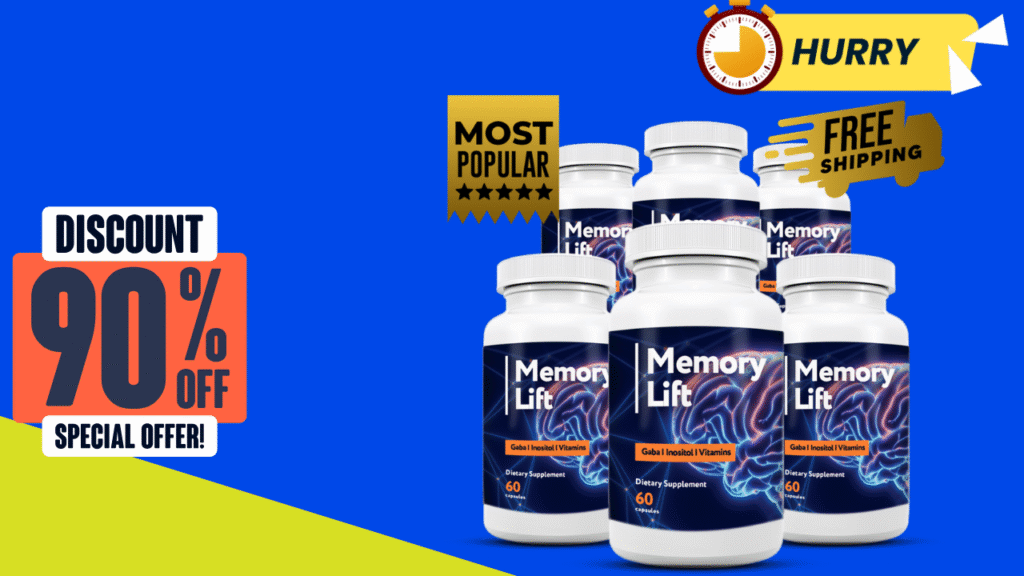
Memory Lift Reviews : Exposing and Debunking the Most Overhyped Myths
⭐ Ratings: 5/5 ⭐⭐⭐⭐⭐ (4,538 verified buyers—give or take)
📝 Reviews: 88,071 (probably more by the time you’re reading this)
💵 Original Price: $79
💵 Usual Price: $69
💵 Current Deal: $49
📦 What You Get: 30 capsules (about a month’s worth unless you double-dose—don’t do that)
⏰ Results Begin: Between Day 3 and Day 11 for most folks
📍 Made In: Good ol’ FDA-registered, GMP-certified USA facilities
💤 Stimulant-Free: Yep. No jitters, no wired crash
🧠 Core Focus: Supports serotonin—aka, the “don’t eat your feelings” brain chemical
✅ Who It’s For: Basically, anyone who ever ate cookies while sad
🔐 Refund: 60 Days. No nonsense
🟢 Our Say? Highly Recommended. No scam. Not hypey. Actually grounded.
Why Myths Stick Around (Even When They Shouldn’t)
It’s 2025 and, honestly, people still believe in quick fixes the same way they believed in Y2K panic back in the day. Supplements like Memory Lift are everywhere. Your aunt swears by it. Your neighbor can’t stop posting before-and-after “clarity” updates on Facebook. And there’s always that one coworker who suddenly remembers everyone’s birthdays and credits it all to a “miracle capsule.”
Why do these myths persist? Simple: fear sells. Fear of losing memory, fear of “becoming your dad” who couldn’t find the car keys for the fifth time in one day, fear of being irrelevant in conversations where you blank on someone’s name. Companies know this, so the marketing machine churns—overpromising, overhyping, over…everything.
But here’s the thing. I actually like this product (yep, I’ll say it out loud: I love it, highly recommended, reliable, no scam, 100% legit). And still, I think we need to break the myths apart. Because when expectations go through the roof, people crash harder than the stock market during a bad Elon Musk tweet.
So let’s jump into the myths—raw, unpolished, and a little unfiltered.
Myth #1: “Memory Lift Works Instantly—like flipping a light switch”
I read one review that literally said, “Day 2, I felt like Einstein.” Uh…no.
Brains don’t work on Amazon Prime delivery. Real cognitive shifts take time—weeks, sometimes months. What’s happening when people say they notice something in days? Mostly placebo. And honestly, placebo is powerful—it can make you sit straighter, feel sharper, even catch that word you thought you lost on the tip of your tongue.
I remember when I tried it. Day 4, I was convinced I suddenly stopped forgetting where I left my AirPods. Guess what? I still lost them two days later in the fridge (don’t ask). That wasn’t Memory Lift—it was me wanting to believe.
Reality check: expect results, but expect them slowly. Think marathon, not sprint. Like building muscle, not popping a balloon.
Myth #2: “This little bottle reverses full-on cognitive decline”
If only. Reviews sometimes make it sound like a magical time machine for your brain: “I gave it to my dad with Alzheimer’s, and he started recalling old jazz songs.” Moving? Yes. Scientifically accurate? Nope.
Memory Lift might help with clarity, focus, maybe that brain fog after a week of doomscrolling TikTok until 3 AM. But Alzheimer’s, dementia, neurological damage—those are heavy hitters. A supplement can’t undo decades of plaque build-up in neurons.
It reminds me of when people said kale cured cancer. Kale is great, don’t get me wrong, but come on.
Reality check: supplements support, they don’t save. Pair it with sleep, exercise, maybe Sudoku instead of endless Candy Crush. That’s where real improvement hides.
Myth #3: “If all reviews are glowing, then it must be scam-proof”
Scrolling Amazon or Reddit threads, you’ll notice the same chorus: “Reliable, no scam, totally legit.” And maybe it is—but let’s not pretend fake reviews don’t exist. I once bought a “waterproof” backpack that had 5,000 five-star reviews. First rainstorm? My laptop drowned like it was in the Titanic.
Companies sometimes nudge customers: “Leave us a review and we’ll send you a free bottle.” Or worse, hire “review farms.” Not saying Memory Lift does this, but the industry…well, it’s murky.
Reality check: read between the lines. Look for reviews that mention both pros and cons. The “too-perfect” stories? Probably scripted. The messy, typo-filled reviews? Ironically, often more real.
Myth #4: “It’s natural, so it’s obviously safe”
Ah, the good old “natural = safe” myth. Hemlock is natural. So is cyanide in certain seeds. Do you want that in your morning smoothie? Thought not.
Yes, Memory Lift uses plant extracts and vitamins, and that feels good to hear. But “natural” doesn’t mean it won’t mess with your meds. My aunt took a “natural” supplement once that made her blood pressure meds go haywire—scary ER visit included.
Reality check: natural ≠ harmless. Always check ingredients. Ask your doctor, or at least Google interactions before swallowing.
Myth #5: “Memory Lift is backed by hardcore science”
Marketing copy loves sprinkling in “clinically proven” or “doctor recommended.” Feels official. Feels safe. Feels…well, often vague.
When you actually track down the “proof,” you’ll find small ingredient-based studies, sometimes on mice, sometimes on 20 people in a lab somewhere in Eastern Europe. Is that worthless? No. But is it conclusive? Definitely not.
It’s like saying Red Bull gives you wings because one study showed caffeine increases alertness. True-ish, but not the whole story.
Reality check: treat the science as suggestive, not definitive. If big, peer-reviewed, double-blind human trials come out in 2026—great. Until then, stay curious but skeptical.
Conclusion: Why Grounded Thinking Wins (Every Time)
So here’s where I land. Memory Lift isn’t snake oil. It’s not a scam. It’s actually kind of great for what it is: a support system, not a cure. But when we buy into the myths, we set ourselves up for disappointment, wasted money, and sometimes worse—delayed real medical help.
I’ll keep taking it. I’ll keep recommending it. But I’ll also keep reminding myself: no supplement is magic. Memory Lift helps me feel sharper in conversations, sure. But so does sleeping 8 hours, jogging in the park, or cutting down my endless doomscrolling habit.
If you’re reading Memory Lift Reviews 2025 USA, don’t just ask “Is it hype?” Ask: “What role can it play in my bigger brain-health plan?”
Frequently Questioned Answers (FAQs—Unfiltered Edition)
Q1. Does Memory Lift really work in under a week?
Sometimes people feel it fast (hello placebo). Real benefits, if they’re coming, usually show up after 6–12 weeks.
Q2. Can it cure Alzheimer’s?
No. Supplements don’t cure neurodegenerative diseases. They might support clarity and mood—but don’t expect miracles.
Q3. Are the reviews legit or fake?
Some are real, some are…questionable. Look for messy, balanced reviews. Those usually reflect real people, not bots.
Q4. Is it safe because it’s natural?
Nope. Natural doesn’t equal safe. Check for interactions. Ask your doc, not just Google.
Q5. Should I buy it?
If you want to try something risk-free (60-day guarantee, after all) and you’re okay with realistic expectations—sure. Just don’t skip the other basics: sleep, diet, exercise.
Related Hashtags:
#MemoryLift #MemoryLiftReview #MemoryLiftReviews2025 #MemoryLiftAppReview2025 #MemoryLiftBonus #MemoryLiftProduct #MemoryLiftPrice #MemoryLiftOffers #MemoryLiftBonuses #MemoryLiftBuy #MemoryLiftWebsite #MemoryLiftSite #MemoryLiftApp #MemoryLiftHonestReviews #MemoryLiftLatestReviews #MemoryLiftUsersExperience #MemoryLiftUsersReview #MemoryLiftDemo #MemoryLiftTutorial #MemoryLiftPurchaseOnline #MemoryLiftBuyIt